
Aura: Daily I AM Affirmations
UPLOSS LIMITEDLifestyle
4.8235.00 Reviews
- Version
- 1.4.3
- Installs
- 100.00K
- Age Rating
- Everyone
Screenshots
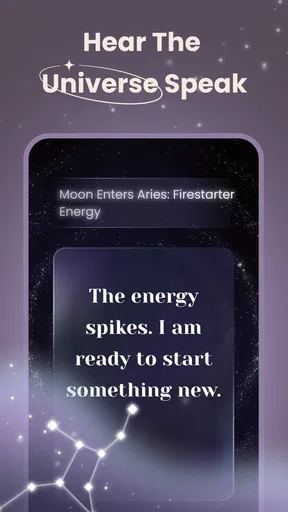
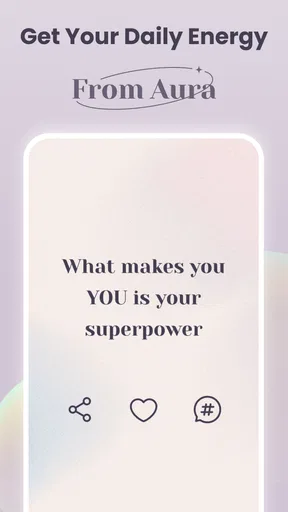
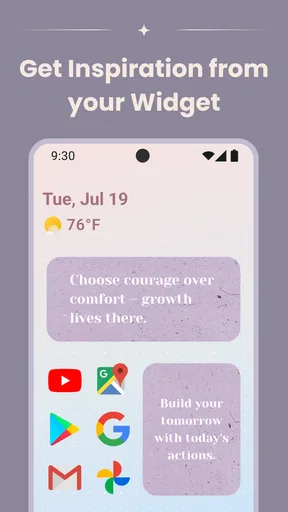
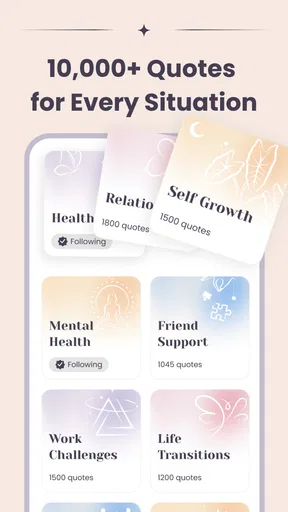
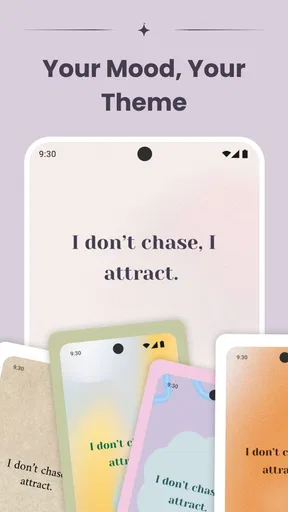
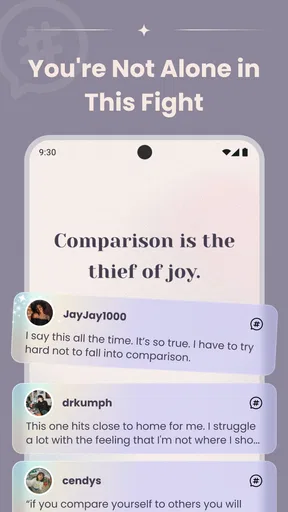
Our Review of Aura: Daily I AM Affirmations
 Analysis by Appyee
I approached Aura: Daily I AM Affirmations as a small lifestyle tool rather than a full wellness program. Its promise is simple: keep encouraging, positive statements close at hand through affirmation widgets and make self-talk easier to revisit during an ordinary day. That narrow focus is also its appeal. I did not expect meditation courses, mood tracking, or a replacement for professional support; I looked at whether a quick affirmation routine could fit naturally into a phone-based life.
The app is free to download, aimed at Everyone, and comes from UPLOSS LIMITED. Its strong reception—an average of 4.8 from around 4.1 thousand ratings—suggests that the straightforward idea connects with many users. After spending time with its daily-use approach, my view is that it works best when treated as a gentle prompt, not as a dramatic solution to confidence, anxiety, or motivation.
How Aura feels during everyday use
I judge Aura less by how polished a widget looks than by whether its prompts help me make a useful choice in the moment. In this section, I’ll focus on the practical trust questions I would consider before relying on a home-screen reminder, including what I can assess directly and where a cautious approach makes sense. That leads naturally to the choices users can make around their own routine.
A quick start matters more than a complicated routine
The most convincing part of this app is the low effort involved. Affirmations are most useful when I actually see them, and a widget can place that reminder in a familiar part of the day instead of asking me to remember another wellness appointment. Checking a phone in the morning, unlocking it before work, or glancing at the home screen between tasks creates natural opportunities to pause.
That makes the app different from a longer guided exercise. A meditation app may ask me to set aside ten or twenty minutes, find a quiet place, and follow audio instructions. Aura’s approach is lighter. It can support a short mental reset when I have no interest in opening a full program. The trade-off is that a short affirmation cannot offer the same depth as breathing practice, journaling, therapy, or a structured course.
I found the concept most useful when I connected it to an existing habit. For example, I could read the widget while waiting for coffee, then choose one sentence to keep in mind during the first work task. That is more practical than opening the app repeatedly without a reason. The reminder becomes a small cue for behavior rather than decoration on the screen.
Perceived speed and the cost of a small interaction
Because this is a focused lifestyle app rather than a content-heavy social platform, I expect the basic experience to feel quick on a reasonably current device. The central activity is reading and revisiting affirmations, so there is no obvious reason for a user to tolerate a long, elaborate journey before reaching the useful part. That simplicity is important: if a positive prompt takes too much effort to access, the routine loses its value.
Still, widgets introduce a practical dependency. The experience is not only about opening the app; it also depends on how the phone handles home-screen widgets and background updates. If a user expects a perfectly timed new message every time they look at the screen, disappointment is possible when the operating system delays or refreshes widget content differently than expected. I would judge the app by whether it remains easy to revisit, not by demanding that every glance feel like a completely new session.
My advice is to give the widget a deliberate place. Putting it on a crowded screen can make it visually disappear among weather, calendars, news, and social shortcuts. A less busy home-screen page makes the affirmation easier to notice and reduces the chance that the feature becomes something I technically installed but never read.
What happens during heavier, repeated use
Repeated use is where this kind of app either becomes a habit or fades into the background. Reading one affirmation once is pleasant, but the real test is whether the prompts continue to feel relevant after several days. I would avoid tapping through them mindlessly. Instead, I would choose a single statement and connect it to a concrete action: sending the difficult email, taking a break before replying, or beginning a task I have been postponing.
That workflow also exposes a limitation. Positive language can feel supportive on one day and unconvincing on another. If a statement is too broad or too far from how I currently feel, I may dismiss it rather than absorb it. Users who prefer practical coaching, measurable goals, or detailed explanations may find affirmation-only content thin. The app is better at creating a moment of encouragement than at explaining why a habit is difficult or how to change it step by step.
For heavy daily use, I would keep expectations modest. The app can be a repeated prompt, but repetition alone does not guarantee personal growth. Its value rises when I use the sentence as a starting point for reflection. A useful trick is to ask, “What would this look like in the next ten minutes?” That turns an abstract idea such as confidence or self-kindness into something observable.
A realistic workday example
Imagine starting a busy morning with several messages waiting and a presentation later in the day. A widget catches my attention before I open a distracting social feed. I read the affirmation, take a few seconds to decide what it means for the first task, and then begin with one manageable action. The app has not solved the presentation nerves, but it has interrupted an automatic scroll and helped me choose a calmer starting point.
Later, the same prompt may feel less useful if I am dealing with a serious conflict or persistent distress. In that situation, a general affirmation is not enough. I would choose a conversation with a trusted person, professional help, or a more structured mental-health resource instead. That boundary matters because self-love language should support real care, not pretend to replace it.
Reliability is partly about the phone around it
For a widget-based tool, reliability has two layers. The first is the app itself: it needs to open cleanly and present its material consistently. The second is the mobile operating system, which controls widget placement, refresh behavior, and background activity. Even when the app is designed well, phone settings can affect how often a widget updates or whether it remains visible after a home-screen change.
I would therefore set it up once, place the widget where it is genuinely seen, and check it after changing battery or background settings. I would not treat a missed refresh as proof that the whole app is unusable. At the same time, a user who relies on exact reminders should test the routine on their own phone before building an important schedule around it.
The current version is 1.4.3, and the app was released on July 24, 2025. Those details place it in a relatively recent stage of its product life, so I would keep the app updated through the normal store process. Updates can matter more for widgets than for a simple reading screen because operating-system changes can affect how home-screen elements behave.
Resource demands and device constraints
Aura is designed for devices running Android or iOS, with the stated minimum operating-system requirement being version 10. That makes compatibility a practical checkpoint before installing it, especially on an older phone that has not received recent system updates. A device meeting the requirement may still feel different from a newer model, particularly if storage is tight or the phone is already struggling with many background apps.
I would not choose this app expecting it to transform an old phone into a wellness device. The most important constraint is likely not raw power but attention: a widget competes with everything else on the home screen. On a small display, limited space can make the text less comfortable to read, while a heavily customized launcher may change how the widget looks or where it can be placed.
There is also a useful trade-off between visibility and clutter. A large widget may make the affirmation easier to read but consume space needed for a calendar or task list. A smaller placement may preserve the layout but reduce the emotional impact of the reminder. I would test the smallest size that remains readable, then enlarge it only if I repeatedly overlook the message.
Free access and the in-app purchase decision
The app is free, which makes it easy to try without committing money first. That is valuable for this category because affirmation styles are personal. A phrase that feels warm and motivating to one person can sound artificial to another, so I would use the free experience long enough to decide whether the daily format actually fits my routine.
Optional purchases range from $2.99 to $49.99 per item. That is a broad span, and it means I would pay attention to the exact item and billing choice before confirming anything. I would not upgrade simply because I like the idea of self-care. I would first ask whether the paid material changes my daily use in a meaningful way, such as making the routine easier to maintain or giving me content I genuinely prefer.
This pricing structure also affects who should skip the app. Someone looking for a completely free, deeply structured wellness program may be happier with a basic notes app, a paper journal, or free content elsewhere. Someone who values a polished, ready-made reminder and finds the prompts personally useful may consider an optional purchase reasonable, but only after testing the free starting point.
How it compares with familiar alternatives
Compared with a notes app, Aura removes the need to write and organize affirmations yourself. That saves time and gives the routine a more intentional feel. The notes alternative wins, however, if I already know exactly which sentences help me or if I want to record why a particular thought mattered on a difficult day.
Compared with a calendar reminder, Aura is more emotionally focused. A calendar can tell me to pause, but it does not necessarily provide a ready-made positive message. The calendar is better when I need a precise time, a recurring appointment, or an action with a deadline. Aura is better for a softer cue that can sit in the flow of the day.
Compared with meditation and therapy apps, this one is much narrower. It demands less time and probably less concentration, but it also offers less depth, education, and personalized guidance. I would recommend Aura as a companion to those tools, not as a substitute. If my main goal is sleep, breath training, symptom tracking, or professional support, another category is a more direct match.
Three ways to get more from the widget
- Use one affirmation as a behavioral prompt. Instead of reading several lines and moving on, translate one into an action that can happen immediately. This keeps the app from becoming passive wallpaper.
- Place it near a decision point. A home-screen page used before work, study, or exercise gives the message context. A widget hidden on a rarely visited page loses much of its practical value.
- Pair it with a short personal note. After reading the statement, write one sentence about where it applies today. This adds the reflection that a simple affirmation tool naturally lacks.
These habits also make the limitations easier to notice. If the wording repeatedly feels irrelevant, I would not force myself to continue out of guilt. A personal note, a custom reminder, or a guided program may be more effective. The right tool is the one that helps me act, not the one that looks most positive on the screen.
Who will enjoy it, and who should pass
I think Aura is a good fit for someone who wants small, frequent encouragement without committing to a long session. It suits people who enjoy visual reminders, are comfortable with affirmation language, and want a lightweight lifestyle addition rather than a complete personal-development system. It may also help a busy user build a pause into a routine that otherwise becomes automatic and rushed.
I would be more cautious recommending it to someone who dislikes generalized positive statements or wants content built around a specific clinical concern. It is also not the best choice for a person who needs detailed habit plans, accountability, journaling depth, or precise scheduled alerts. Those needs point toward a task manager, journal, meditation service, or professional resource instead.
The Everyone age rating makes the app broadly approachable, but broad accessibility does not mean every message will suit every personality. Parents and younger users may still benefit from discussing how to interpret affirmations realistically: encouragement is useful, while pretending that a sentence can erase every problem is not.
My performance verdict
After weighing speed expectations, repeated use, widget behavior, and device limitations, I see Aura as a focused and approachable reminder tool. Its strongest performance is not measured by demanding features or long sessions. It succeeds when it appears at the right moment, loads without creating friction, and helps me replace an automatic reaction with a kinder, more deliberate one.
Its weaknesses come from the same simplicity. It cannot provide the depth of a guided wellness program, and a widget can become invisible if I place it carelessly. The optional purchases also deserve a thoughtful decision rather than an impulsive upgrade, especially because the app’s core idea is easy to test before spending.
With over 100 thousand installs, the app has already found a substantial audience, and its 4.8 average indicates a notably positive reception. I would recommend trying the free version first, placing the widget beside a routine I already follow, and judging it by whether it changes one real moment in the day. If that small interruption helps, Aura earns a place on the home screen. If I need structured guidance, personal tracking, or deeper emotional support, I would choose a more specialized alternative instead.
Verdict
Strengths of Aura: Daily I AM Affirmations
- Short affirmations fit easily into busy daily routines.
- Calming visuals and audio can support a relaxing self-care moment.
- Personalized reminders help encourage consistent affirmation practice.
- A broad range of themes covers confidence, wellness, and motivation.
- Simple navigation makes the app approachable for first-time users.
Limitations of Aura: Daily I AM Affirmations
- Some useful content and features may require a paid subscription.
- Affirmations can feel repetitive after extended daily use.
- Benefits depend largely on personal belief and consistent engagement.
- Reminder notifications may become distracting if enabled too frequently.
- Limited customization may not suit users wanting fully personal statements.
Similar Picks in This Category
View All
SmartThings
Samsung Electronics Co., Ltd.4.6

Google Home
Google LLC4.0

Pinterest4.2

Astrotalk - Talk to Astrologer
Astrology & Horoscope4.7

My Verizon
Verizon Consumer Group4.5

Samsung Wallet (Samsung Pay)
Samsung Electronics Co., Ltd.4.1
Frequently Asked Questions
What is Aura: Daily I AM Affirmations, and how does it work?
Aura: Daily I AM Affirmations is a personal development app designed to help users build a more positive mindset through repeated affirmations. After opening the app, you can explore statements focused on confidence, self-love, motivation, calmness, abundance, and other themes. The experience generally encourages you to read, listen to, or repeat affirmations regularly so they can become part of your daily routine.
Is Aura: Daily I AM Affirmations free to download and use?
The app may be available to download for free, but some features can require a subscription or in-app purchase. Depending on the current version, premium access may include additional affirmation categories, audio content, personalization options, or an ad-free experience. Before confirming a trial or subscription, carefully review the price, billing frequency, renewal terms, and cancellation instructions shown in the app store.
Can I customize the affirmations and create a personal daily routine?
Aura: Daily I AM Affirmations is intended to fit different personal goals, so users may be able to select topics or affirmation themes that match their needs. You can use the app at a convenient time, such as in the morning, before sleep, or during a short break. Available customization options can vary by device and subscription level, so check the in-app settings after installation.
Does Aura: Daily I AM Affirmations work without an internet connection?
Some basic parts of the app may work offline once content has been loaded, but an internet connection can be necessary for downloading new affirmations, synchronizing preferences, receiving updates, or accessing subscription features. Offline availability may also depend on whether the app stores audio or other content locally. If you plan to use it while traveling, open the desired material beforehand and test it without a connection.
Can affirmations replace therapy or professional mental health support?
No. Aura: Daily I AM Affirmations can be a useful wellness tool for reflection, encouragement, and creating a positive daily habit, but it should not be considered a replacement for therapy, medical advice, or emergency support. Affirmations may not be suitable as the only help for serious anxiety, depression, trauma, or other mental health concerns. Contact a qualified professional if you need personalized guidance or immediate assistance.
